
Floors Built to Handle Daily Family Traffic
Hardwood Flooring in Liberty for homes needing durable surfaces that withstand years of constant use
A-1 Carpet & Fine Floors installs both solid and engineered wood flooring across residential properties in Liberty. The distinction between these two types determines how the floor responds to temperature shifts and humidity common in East Texas. Solid hardwood relies on a single piece of wood milled to thickness, while engineered wood layers thin wood veneer over a plywood core that resists expansion and contraction more effectively in variable climates.
The installation process begins with subfloor evaluation to identify areas where moisture barriers or leveling compounds are required before any wood goes down. Custom layouts account for room dimensions and natural light patterns, with finish selection affecting both the immediate appearance and how scratches show over time. Darker stains mask wear better in high-traffic zones, while lighter finishes display grain patterns more prominently but require more frequent attention to scuff marks.
Schedule a property evaluation to determine whether solid or engineered wood suits your subfloor conditions and climate exposure.
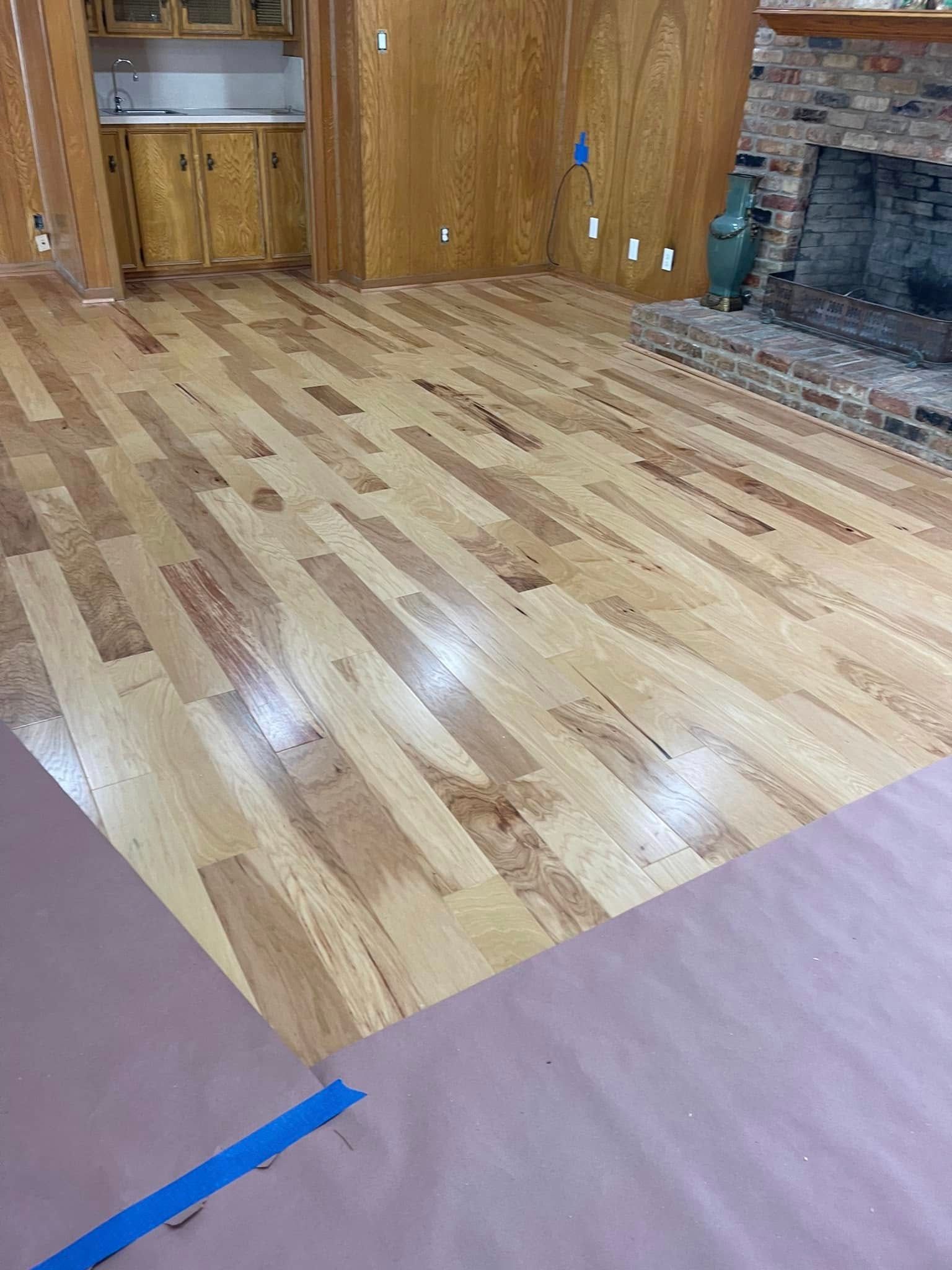
What Proper Hardwood Installation Requires
Acclimation matters more than most homeowners realize. Wood flooring sits in the installation space for several days before work begins, allowing the material to adjust to the indoor humidity level. Skipping this step results in gaps between planks once heating or cooling systems cycle through seasonal changes. The wood either shrinks away from adjacent pieces or swells against them depending on whether it was drier or wetter than the room when installed.
Once the floor is down and finished, you notice the difference in how sound carries compared to carpet or vinyl. Footsteps produce a solid, resonant tone rather than the muffled thud of softer materials. The surface feels rigid underfoot, with no flex or give when you walk across it. Furniture legs no longer leave permanent compression marks the way they do in carpet, and spills sit on top of the finish instead of soaking into fibers.
Replacement projects involve removing existing flooring and inspecting the subfloor for damage caused by previous water exposure or improper installation. Uneven areas get leveled before new wood is laid, and transitions between rooms require threshold pieces that accommodate height differences between flooring types. These details determine whether doors clear the new floor height and whether the finished surface sits flush with adjacent rooms.
Questions Property Owners Ask Before Installation
Homeowners in Liberty often ask about the differences between installation methods and what affects long-term durability. These answers address the practical considerations that come up during project planning.
What determines whether solid or engineered hardwood works better in a specific room?
The subfloor type and the room's exposure to humidity fluctuations guide the choice. Engineered wood performs better over concrete slabs and in spaces where temperature control varies, while solid hardwood suits wood subfloors in climate-controlled areas. Basements and kitchens typically require engineered products due to moisture exposure.
How does the finish type affect maintenance requirements?
Oil-based polyurethane finishes create a harder surface that resists scratches but require longer drying times and produce strong odors during application. Water-based finishes dry faster with less odor but may need more frequent reapplication in high-traffic areas. The choice depends on whether you can vacate the space during curing and how much wear the floor will see.
What causes gaps to appear between hardwood planks after installation?
Wood naturally expands and contracts with humidity changes. If the material wasn't acclimated to the indoor environment before installation, or if indoor humidity drops significantly during winter heating, gaps open between planks. Running a humidifier during dry months minimizes this movement.
When should existing hardwood be replaced rather than refinished?
Deep scratches that penetrate through the wood's wear layer, water damage that causes cupping or warping, and extensive discoloration from sun exposure often mean replacement makes more sense than refinishing. If the floor has been sanded multiple times already, insufficient thickness remains for another refinishing cycle.
What preparation steps happen before installation begins?
The subfloor gets inspected for level variations, moisture content, and structural soundness. High spots are sanded down, low spots filled with leveling compound, and moisture barriers installed where needed. This groundwork prevents the finished floor from developing squeaks or uneven sections.
A-1 Carpet & Fine Floors handles hardwood projects from material selection through final finish application. Request a detailed estimate that accounts for your current subfloor condition and the specific wood species you're considering.