Waterproof Surfaces That Handle Real Spills
Vinyl & LVT Flooring in Liberty for kitchens and bathrooms where water exposure happens daily
Water sits on top of luxury vinyl tile without penetrating to the subfloor, which makes it function differently than laminate or hardwood in rooms where splashes and humidity are constant. A-1 Carpet & Fine Floors installs both vinyl plank and LVT products across residential properties in Liberty, with the format choice depending on whether the space benefits more from wide plank aesthetics or smaller tile patterns. The waterproof core in these products prevents the swelling and delamination that occurs when moisture reaches wood-based flooring.
Installation involves subfloor preparation similar to other floating floors, but the material's flexibility allows it to conform to minor imperfections that would telegraph through rigid tile. Click-lock systems let individual planks or tiles connect without adhesive, while glue-down applications create a more permanent bond for high-traffic commercial spaces. The wear layer thickness determines how well the surface resists scratches from pet claws and furniture movement.
Arrange an on-site consultation to compare wear layer options and see how different plank widths change the visual scale of your room.
How Vinyl Flooring Addresses Moisture Problems
The core construction explains why this flooring type works in basements and bathrooms where other materials fail. A rigid or flexible polymer core sits between the printed design layer and the wear layer on top, creating a sandwich that blocks water from reaching the subfloor. Even if water sits on the surface for hours, it doesn't migrate through the material or cause the edges to curl upward the way laminate does.
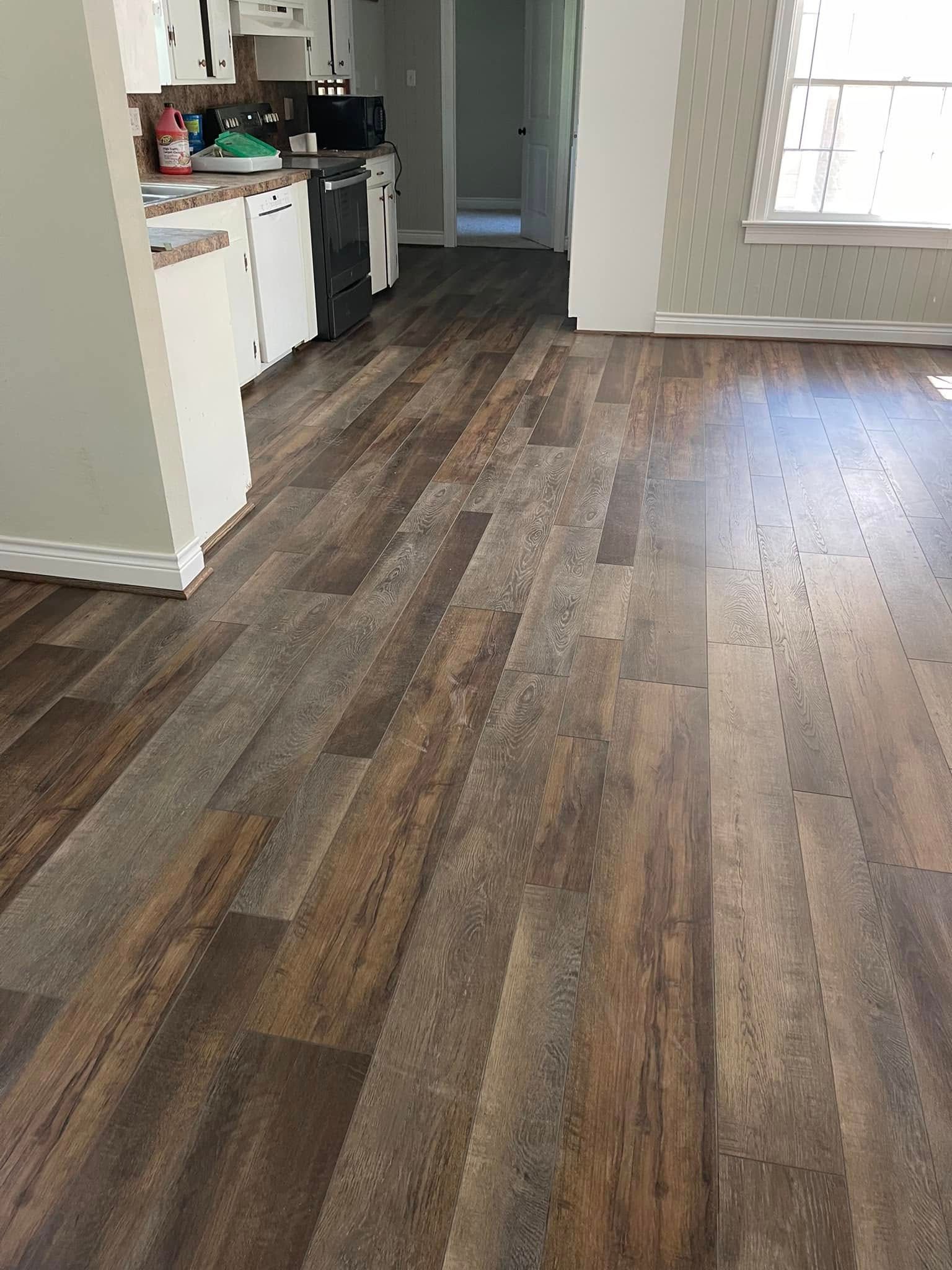
After installation, the floor feels slightly softer underfoot than tile or hardwood but firmer than carpet. Temperature doesn't transfer through the material as quickly as ceramic, so bare feet don't experience the cold shock common with tile floors in winter. The surface texture mimics wood grain or stone patterns closely enough that the difference becomes apparent only when you crouch down to examine it closely.
Replacement projects remove the old flooring and address any subfloor damage caused by previous water intrusion. Uneven areas require leveling compound to prevent the flexible vinyl from dipping into low spots, which would create visible depressions in the finished surface. Transitions to adjacent rooms use reducers and T-moldings that accommodate height differences while maintaining a clean visual line.
Common Questions About This Flooring Type
Property owners considering vinyl or LVT often want clarity on how the material compares to alternatives and what affects performance over time.
What distinguishes luxury vinyl tile from standard vinyl flooring?
LVT uses a thicker wear layer and more detailed embossing that replicates wood or stone texture more convincingly. Standard vinyl sheet flooring typically offers a smoother surface with less dimensional texture, making LVT the better choice when you want the material to closely resemble natural products.
How does the wear layer thickness affect durability?
Residential products typically range from 6 to 20 mils in wear layer thickness. Thicker layers resist scratches and dent marks better, particularly in households with large dogs or heavy furniture. For Liberty homes with active families, a 12-mil or thicker wear layer provides noticeably better long-term performance.
What happens if water gets between the planks?
Waterproof LVT prevents water from penetrating the material itself, but standing water that seeps into seams can still reach the subfloor if the installation isn't properly sealed. Glue-down applications eliminate this risk entirely, while floating floors benefit from silicone applied along high-exposure seams in wet areas.
When does vinyl plank make more sense than vinyl tile formats?
Plank formats create a wood-look floor with longer sight lines and fewer seams, which works well in living areas and bedrooms. Tile formats suit bathrooms and entryways where smaller modules allow for more intricate patterns and easier cuts around fixtures.
How does temperature affect vinyl flooring performance?
Extreme heat can cause expansion that leads to buckling if the floor is installed too tightly against walls. Leaving a small gap around the perimeter allows the material to expand and contract with temperature changes without lifting or warping. This detail matters more in spaces with large windows or direct sun exposure.
A-1 Carpet & Fine Floors stocks multiple vinyl and LVT product lines for comparison during selection. Schedule a material review session to evaluate wear layer options and see full plank samples in your actual lighting conditions.